How Long It Takes
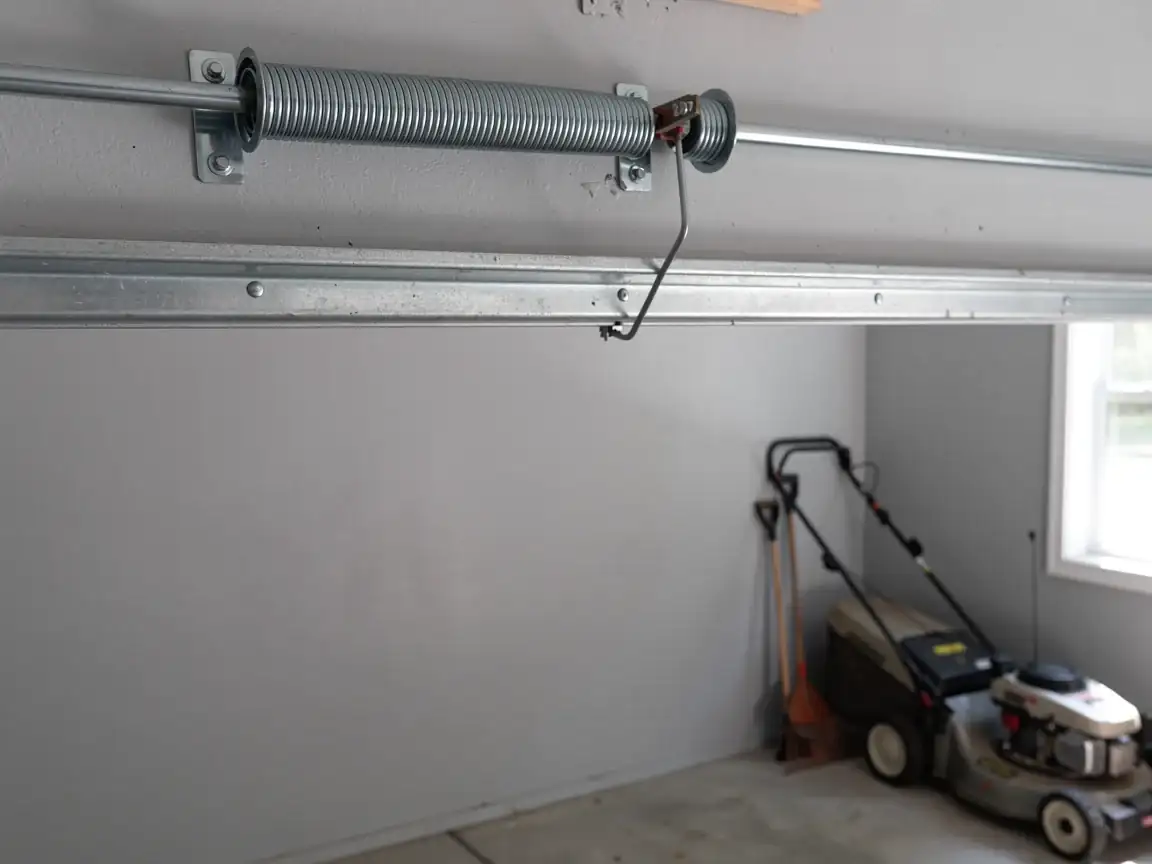
A straight torsion spring swap on a single door usually runs under an hour once the tech is on site and has the right spring on the truck. Double doors with two springs, or a setup where both springs have gone at once, take longer because the door has to stay balanced through the whole job, not just closed.
The honest limitation: not every spring is a stock size. Some of the heavier doors from the 1980s and 90s builds around here were spec'd with odd wire diameters or non-standard wind lengths, and if your door falls into that group, the part may need to be ordered rather than pulled off the shelf. That's the difference between a same-day fix and a two-day wait, and it has nothing to do with how good the tech is - it's just what's on the truck versus what the supplier has to send.
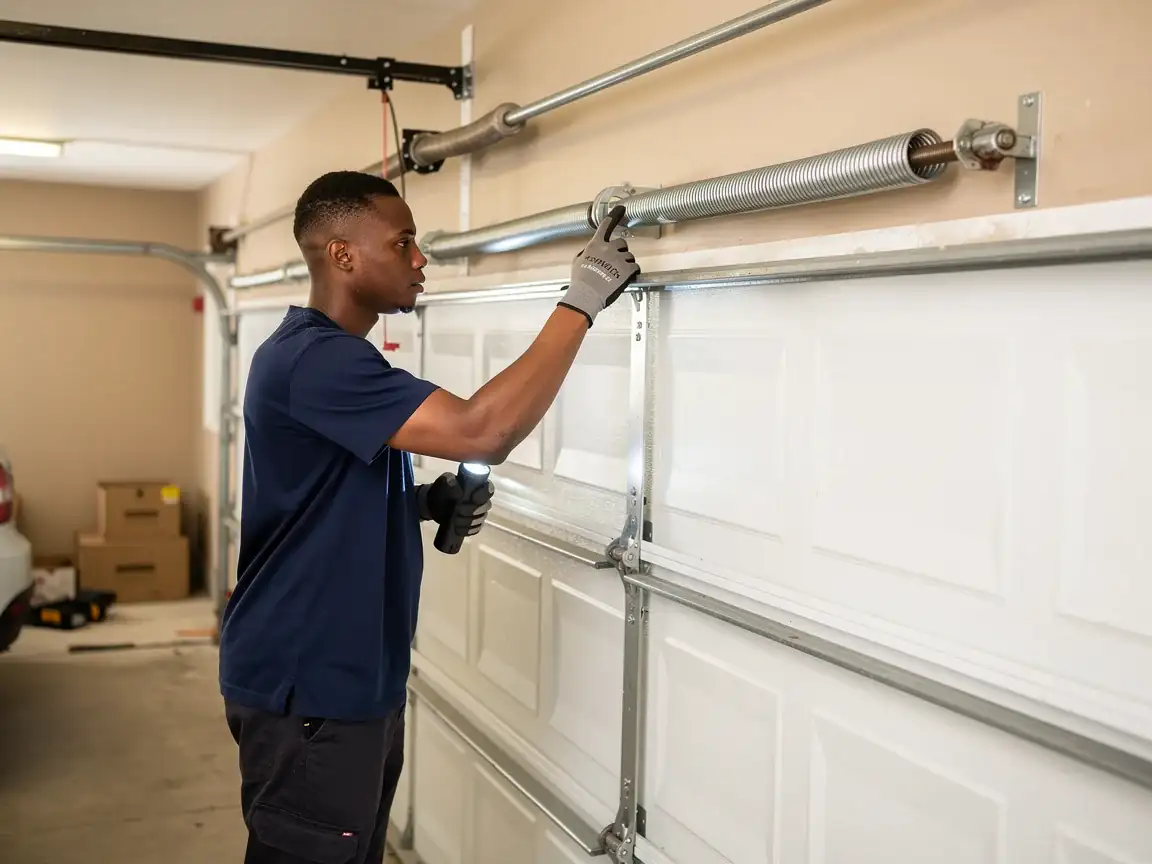
We don't guess at this over the phone. A tech measures the spring, the drum, and the cable drum before quoting a timeline, because guessing wrong means a second trip.
What Causes It Around Here
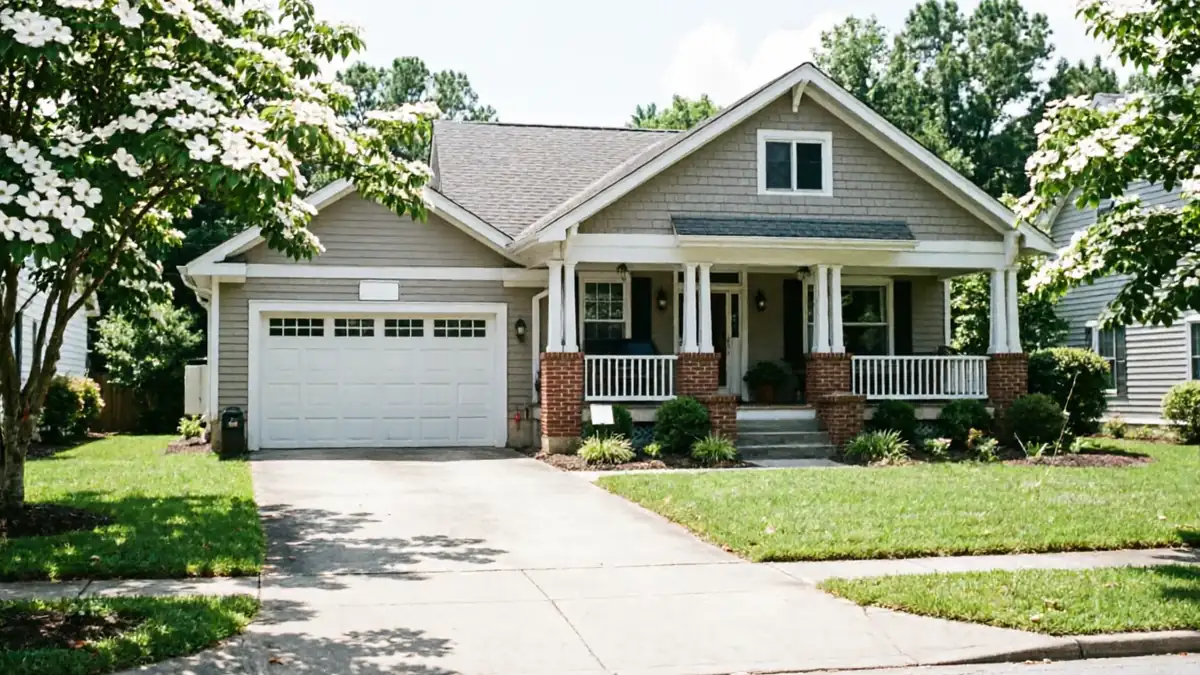
Most of the housing stock across this service area went up in the 1980s and 90s
Which means a lot of garage doors are running on original or first-replacement torsion springs that have simply logged their cycle count. A spring is rated for a number of open-close cycles, not years, but age and cycles track together on a house that's been opened and closed twice a day for three decades.
The area sits in a cold-moderate climate band, and that matters more than people think
Steel contracts in cold weather and expands in heat, and a spring that's already near the end of its rated cycles is the first thing to give when that seasonal swing stresses the coil. That's why call volume for snapped springs tends to cluster - not because of one storm, but because a whole subdivision built in the same five-year window is aging out at close to the same time.
We're not saying every door from that era is about to fail
We're saying if your house is from that build period and the door's gotten noticeably heavier to lift by hand, the spring is the first thing worth checking before anything else.
What the Repair Takes
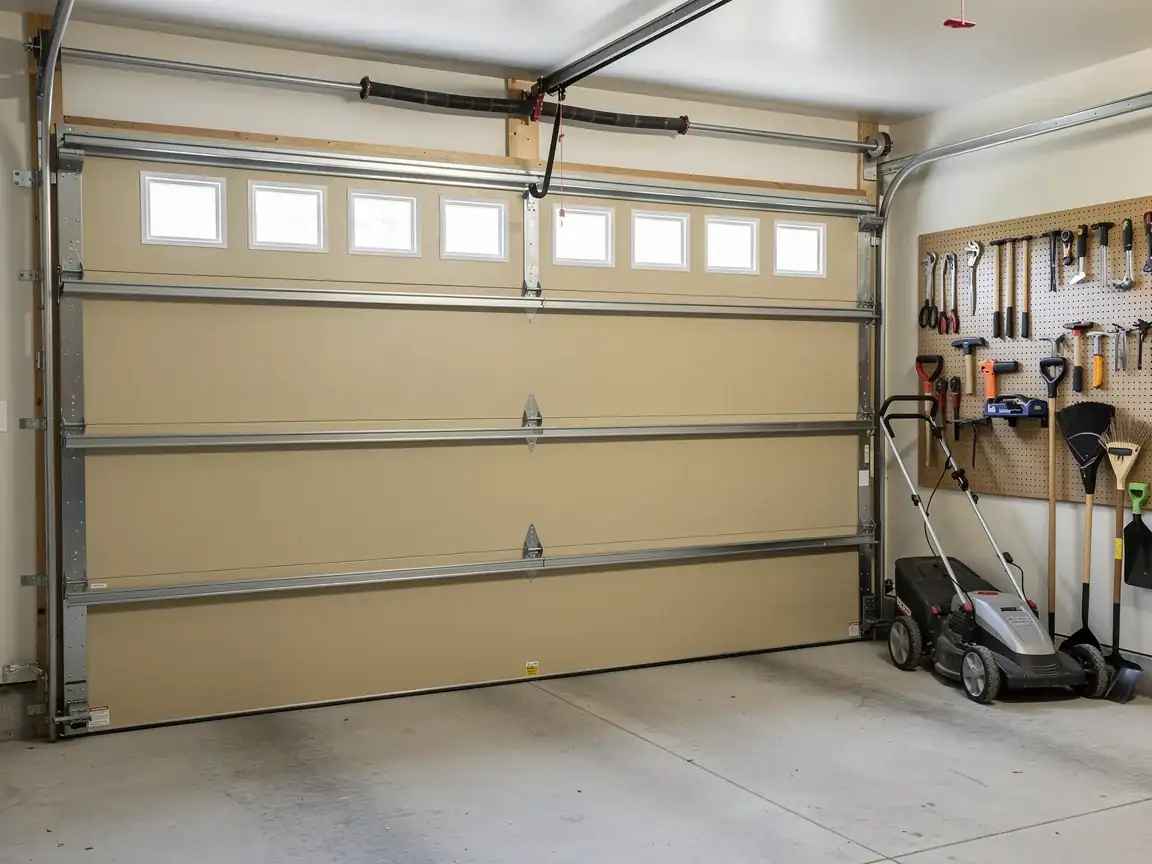
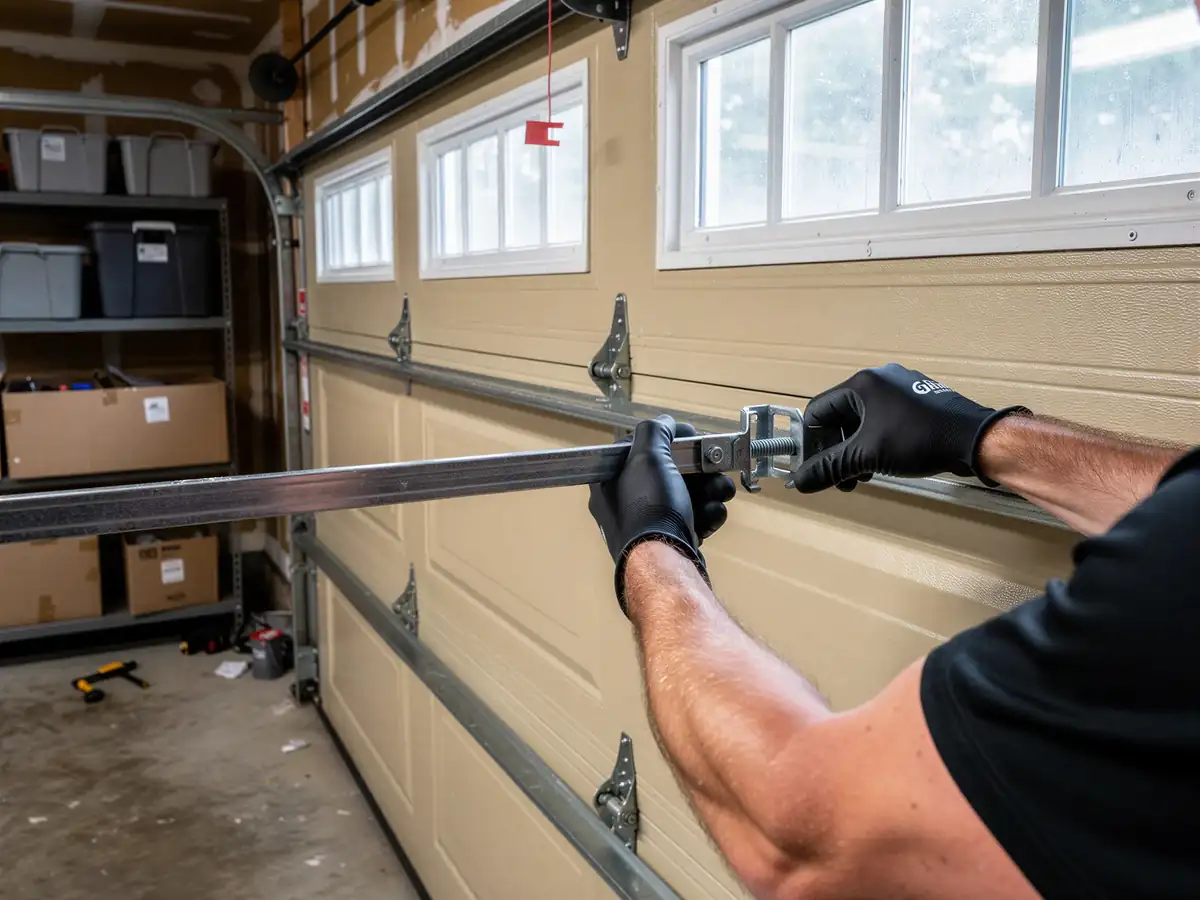
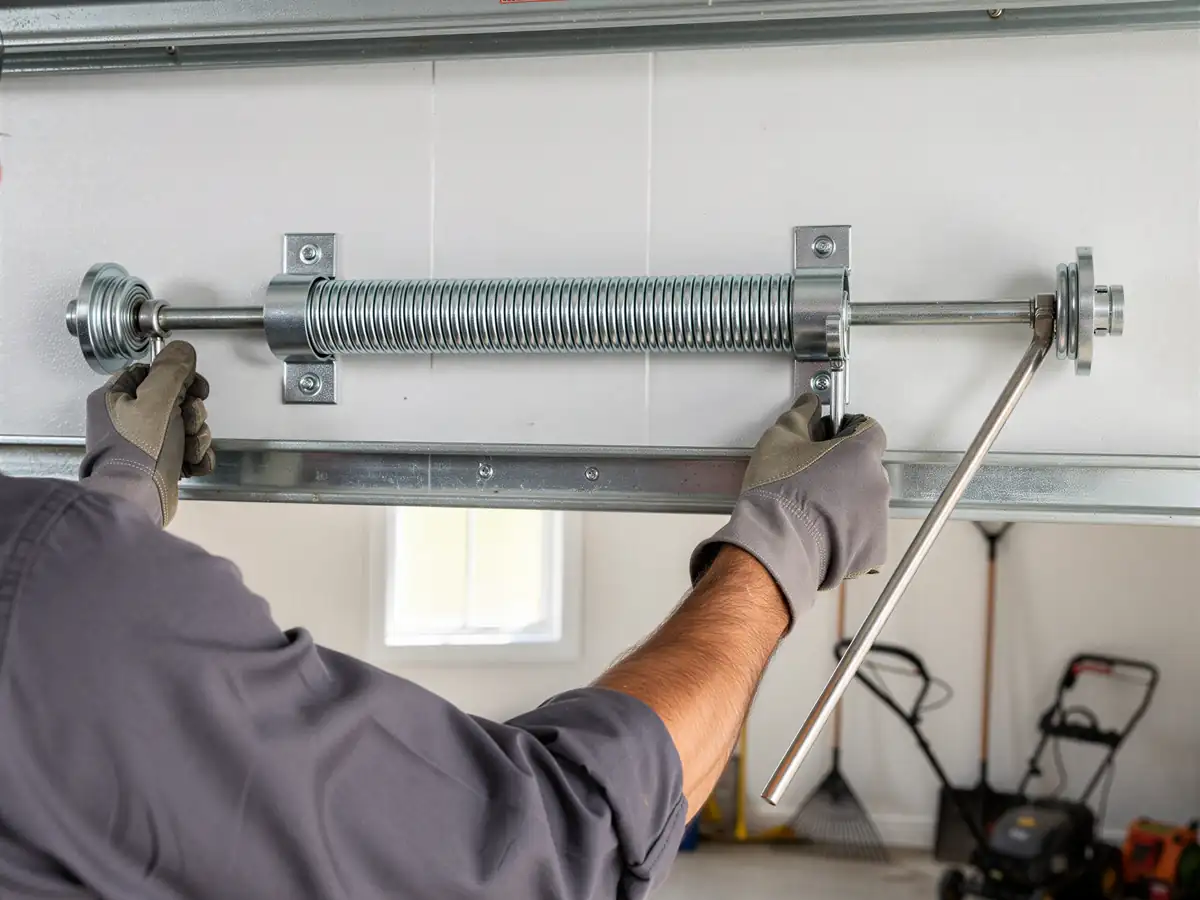
The job is mechanical, not electrical: disconnect the opener, clamp the door, unwind the old spring under control, pull it, and wind in the replacement to the correct number of turns for your door's weight. Get the turns wrong and the door is either too heavy for the opener or slams down on its own - so this isn't a job to eyeball.
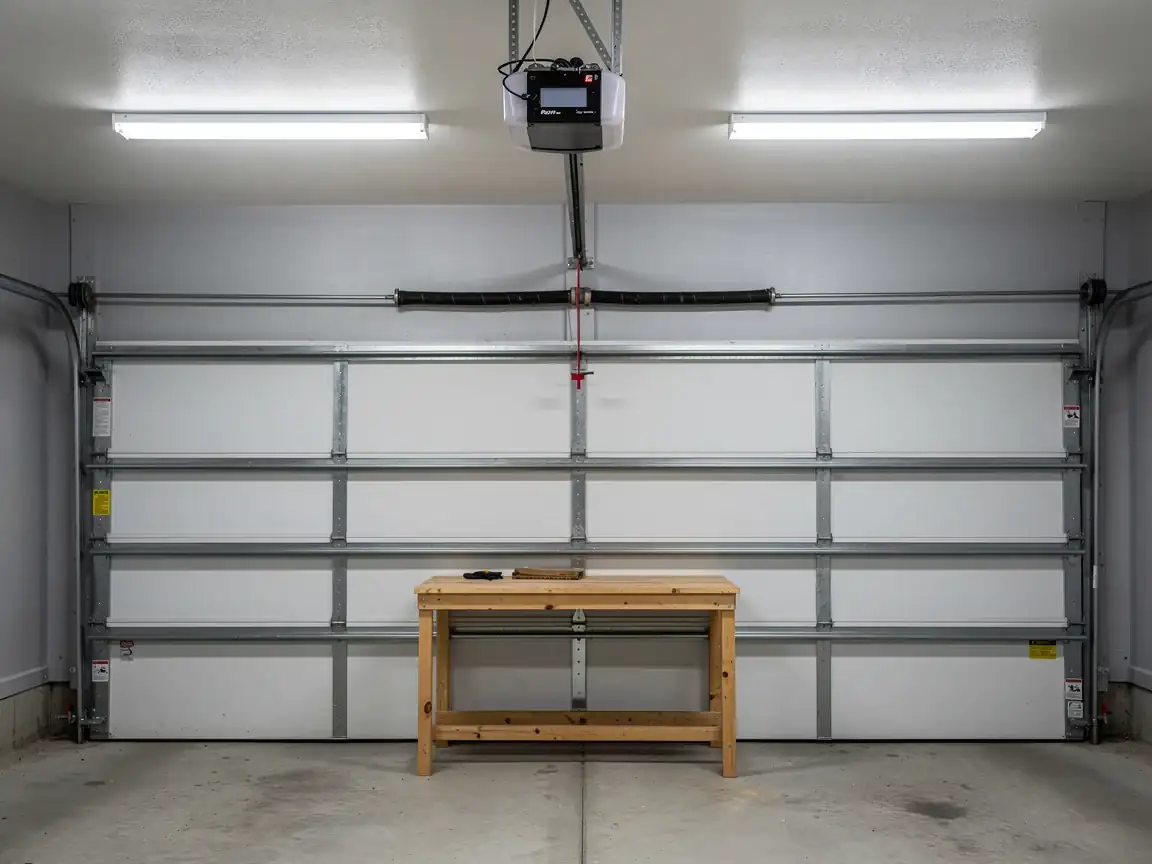
Most single-car doors use one torsion spring; most double-car doors use two, and when one goes, the other is usually close behind on cycle count even if it hasn't snapped yet. We'll tell you straight if we think the second spring is worth replacing at the same time instead of waiting for a second service call.
We also check the cables, drums, and center bearing while we're in there, because a spring failure sometimes takes a cable with it, and a cable that's fraying but hasn't snapped yet is cheaper to replace now than after it lets go. None of that is a push to sell extra work - it's what's already exposed once the door is open, so it gets a look either way.
The Symptom
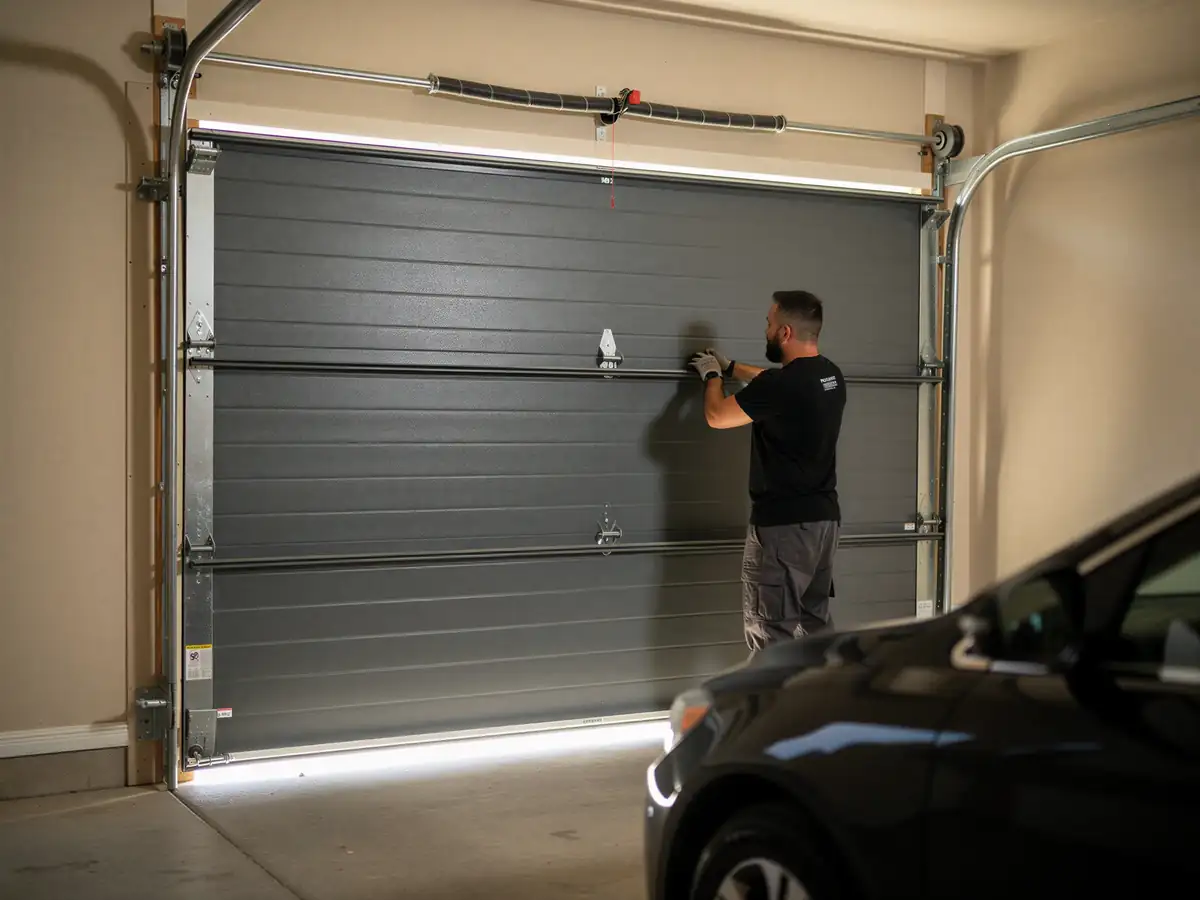
The clearest sign is a door that suddenly feels like it weighs twice as much when you lift it by hand with the opener disconnected. A healthy torsion spring does most of the lifting; once it's broken, you're fighting the full weight of the door and track hardware alone.
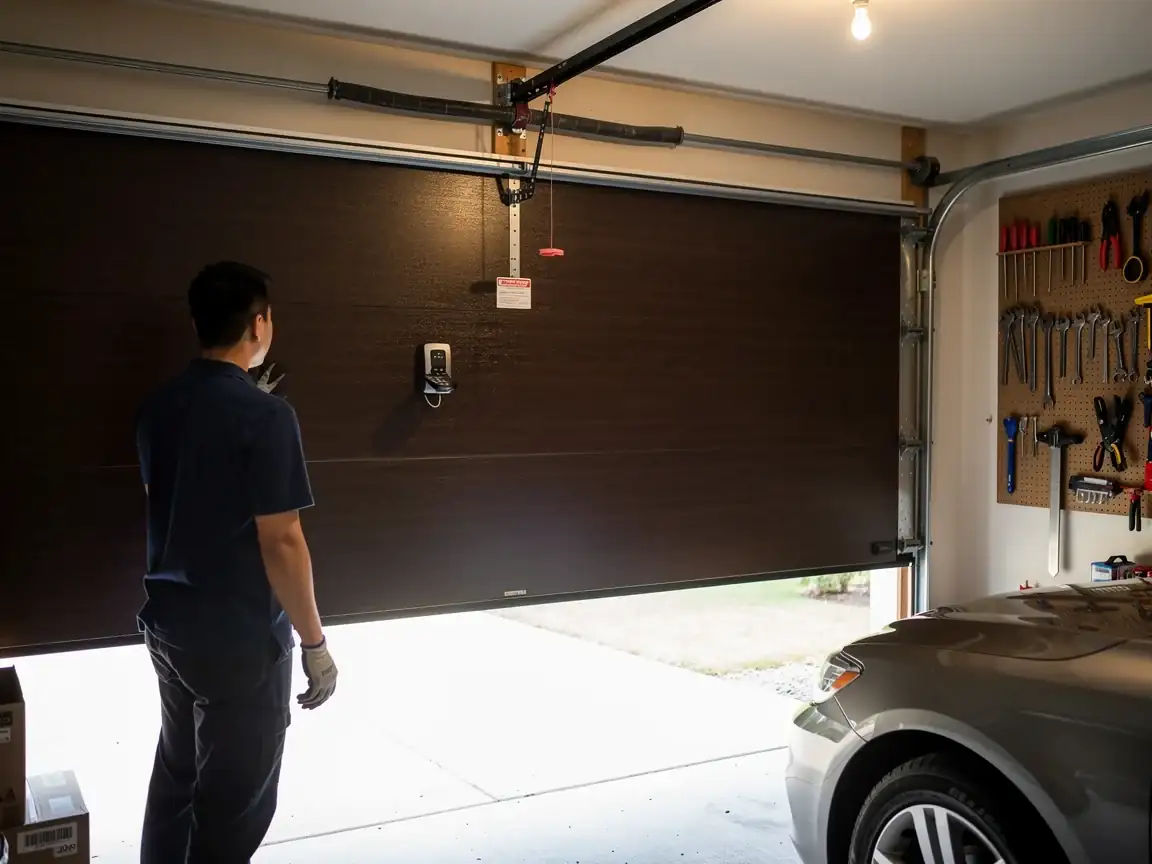
Other signs show up before the full break: a loud bang from the garage (that's often the spring letting go, not an intruder), a door that opens a few inches and stalls, or an opener that strains and reverses instead of completing the cycle. If the door looks slightly crooked when it's halfway open, one spring may have gone while the other is still holding.
Don't try to force a door open manually past that point, and don't let anyone short on experience reach into a wound spring under tension - it's one of the few things in a house that can genuinely hurt someone. If you're seeing any of these signs, it's worth a call before the second spring goes too, since a door running unbalanced on one good spring wears that spring out faster.