How Long It Takes
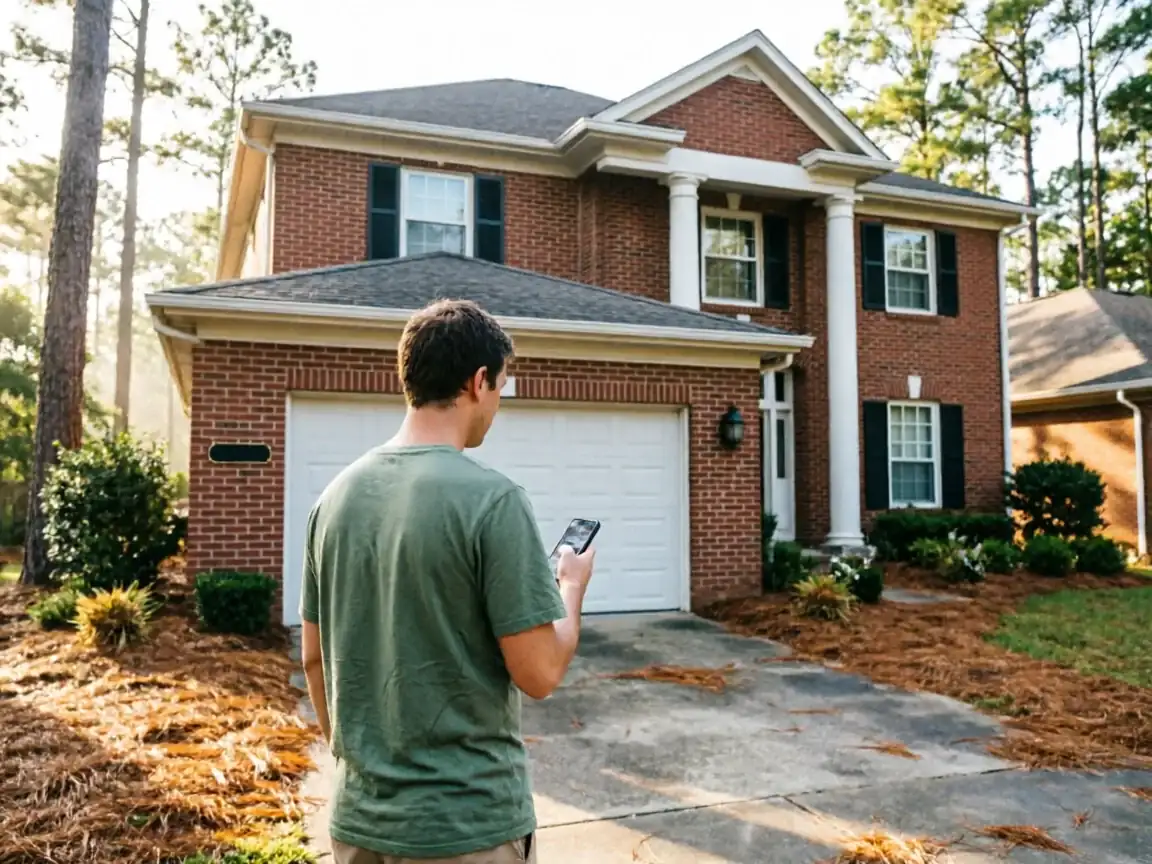
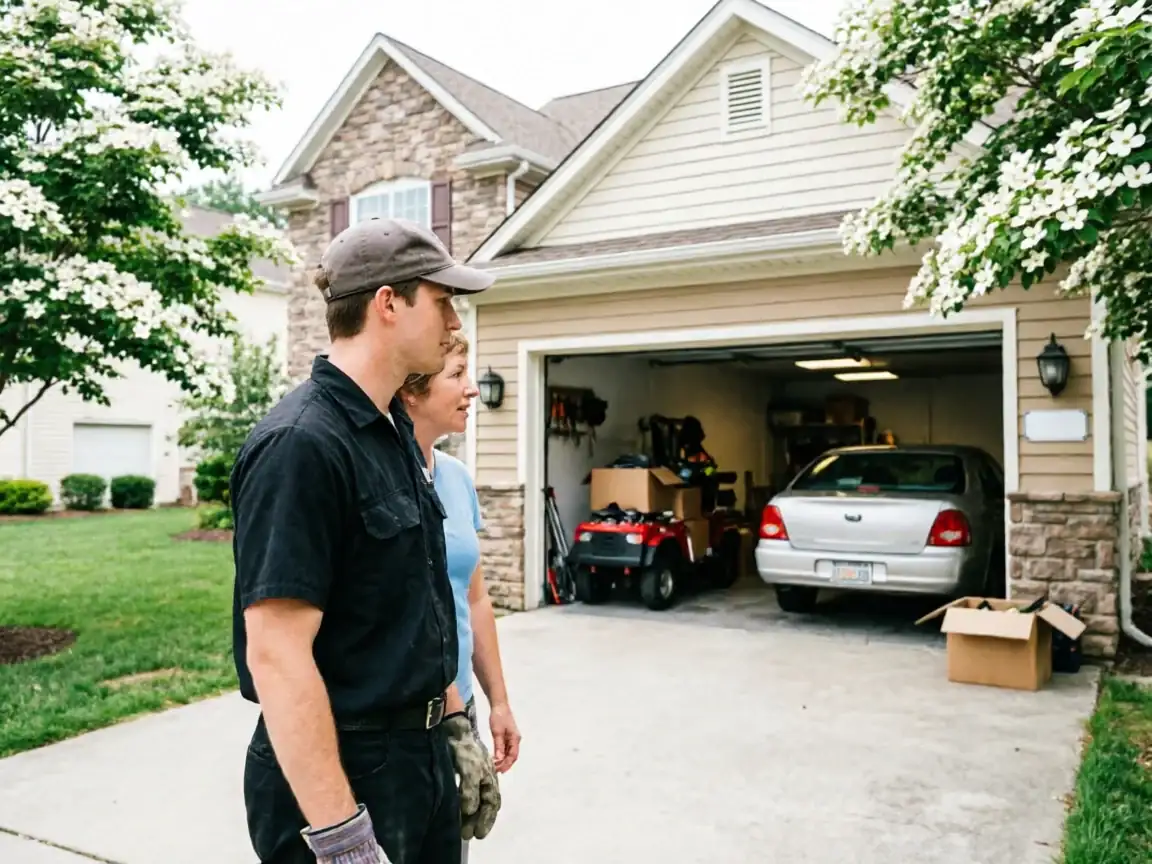
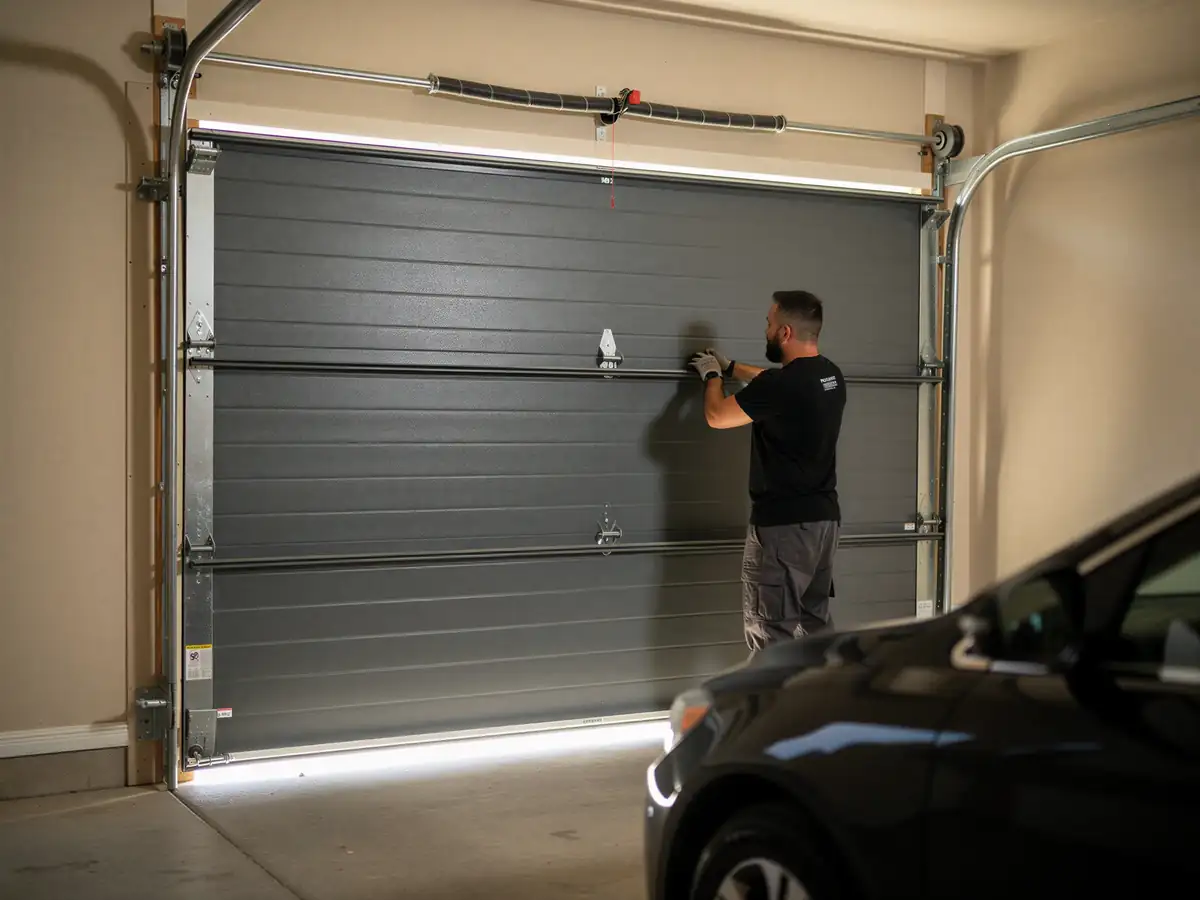
Portsmouth is about 13 miles from our Chesapeake shop, so a maintenance visit here starts with that drive. We build it into the schedule rather than squeeze it in between closer jobs, which is why we ask you to pick a block of time instead of a fixed hour. Once the truck is in your driveway, a standard maintenance visit - lubrication, hardware inspection, balance check, safety reversal test - runs the same length it would anywhere else in the area. The drive adds to planning, not to the work itself.
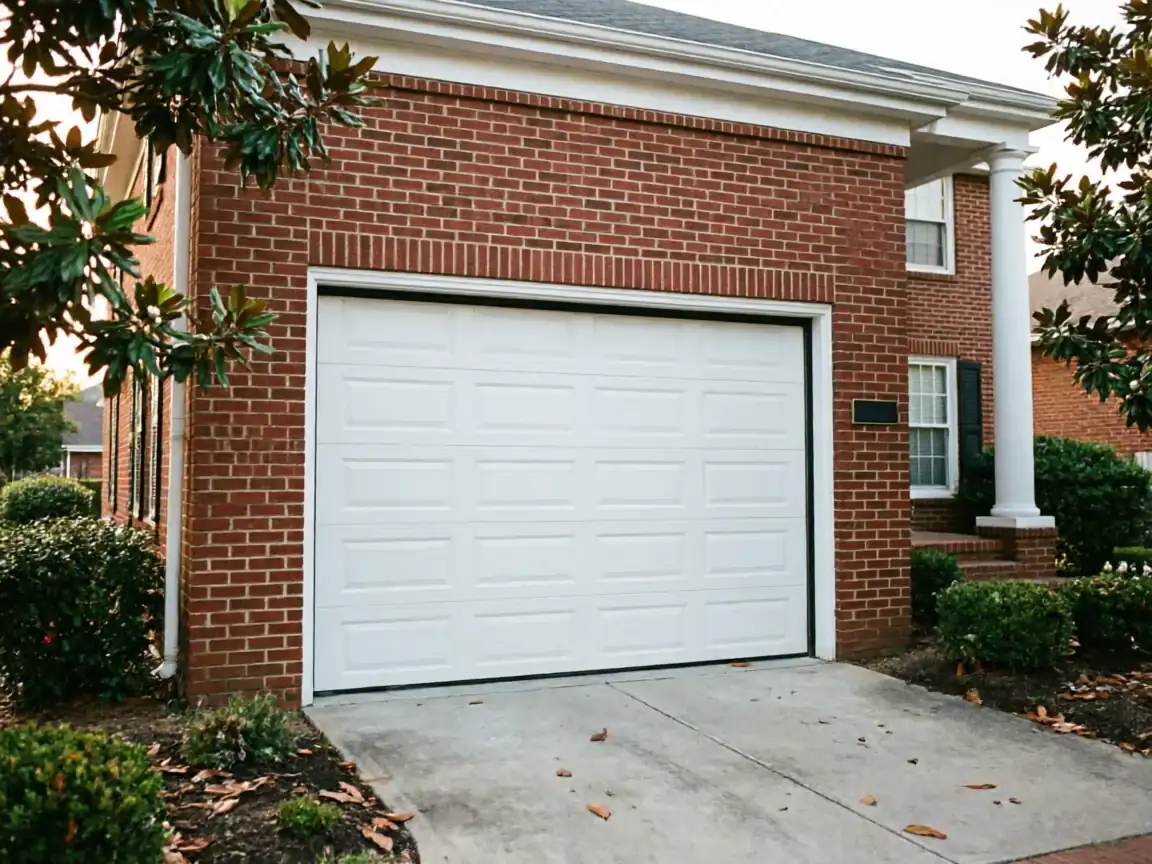
What changes the clock more than the miles is the door. Median homes in this part of Portsmouth were built around 1966, noticeably older than the 1980s-90s stock that makes up most of the broader service area. A door and opener from that era, or a replacement installed on original track from that era, often needs more time on inspection because the hardware wasn't standardized the way later doors were. We'd rather take the extra ten minutes checking a worn cable drum on an older setup than rush it and have you calling us back in a month.
How to Book
Because we're coming from Chesapeake, we ask Portsmouth customers to confirm the day before rather than same-morning
So the route holds together. Tell us the door's rough age if you know it - for a lot of Portsmouth houses that means pre-1970 - and whether it's ever been serviced. That one detail changes what we load on the truck before we leave the shop, since older torsion setups sometimes use spring sizes and drum styles that newer trucks aren't stocked for by default.
You can see the areas we cover, Portsmouth included, on our service area page
And if what you actually need is a broader look at maintenance plans and pricing, that lives on our main Chesapeake maintenance page rather than here. This page is just about what a visit to a Portsmouth address looks like.
What the Repair Takes
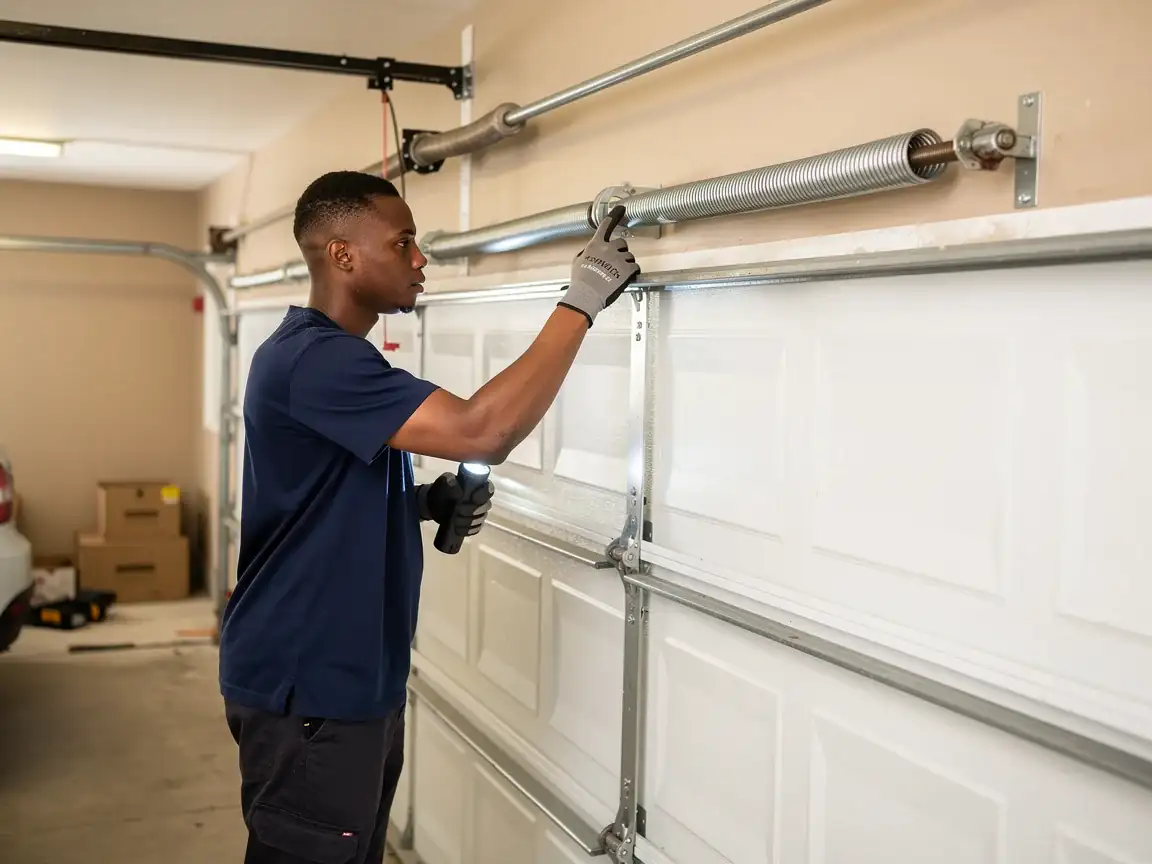
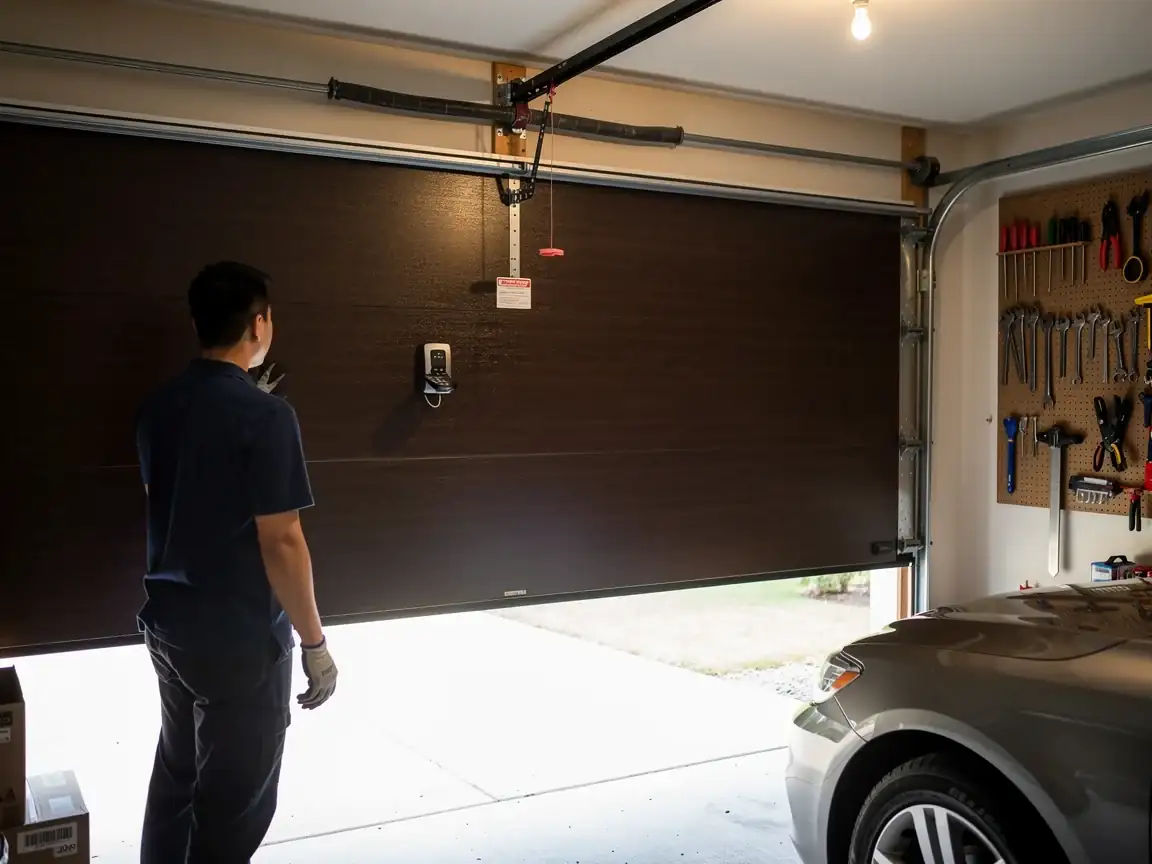
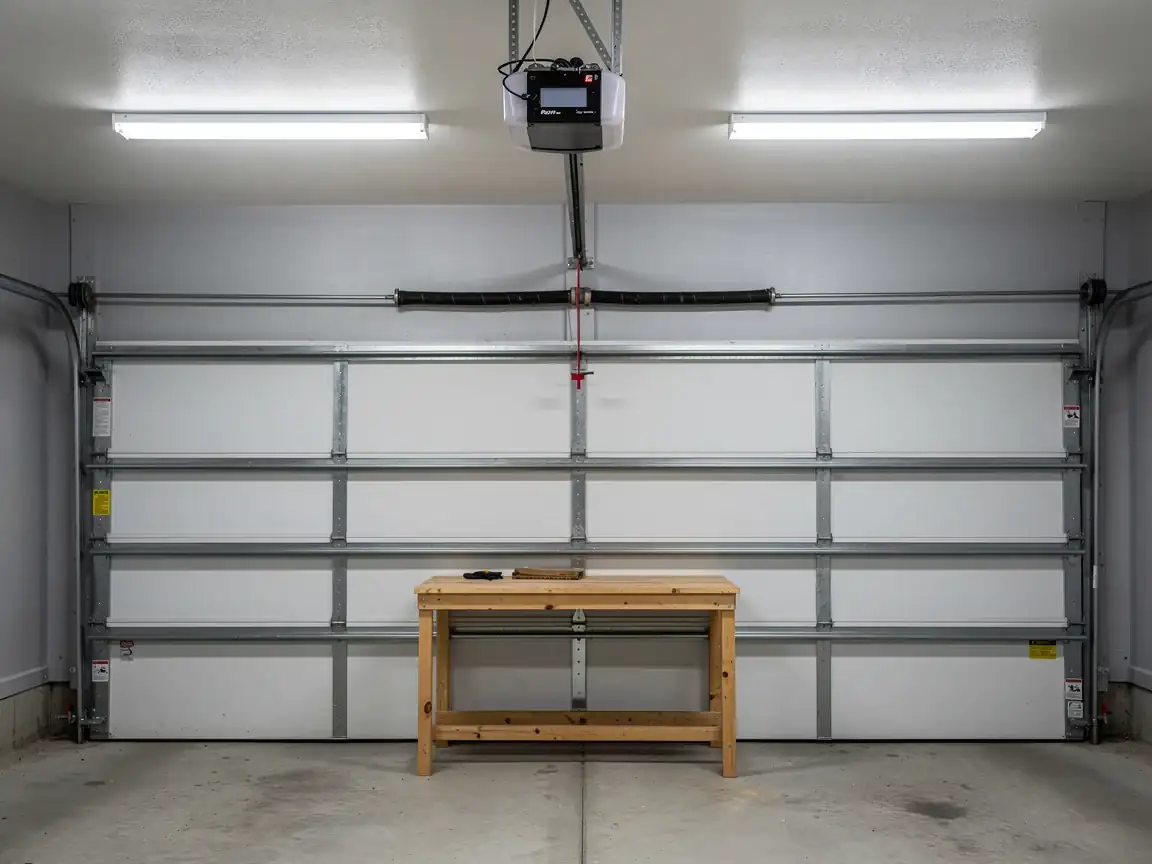
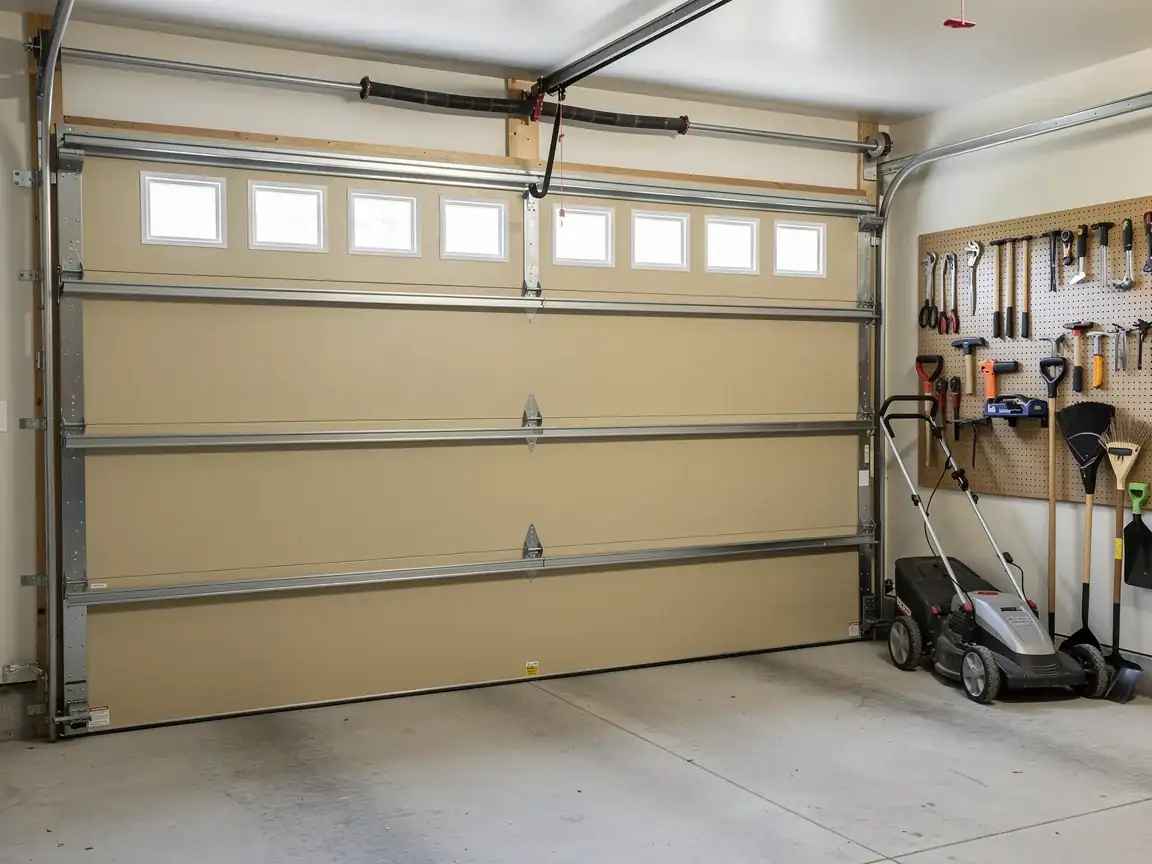
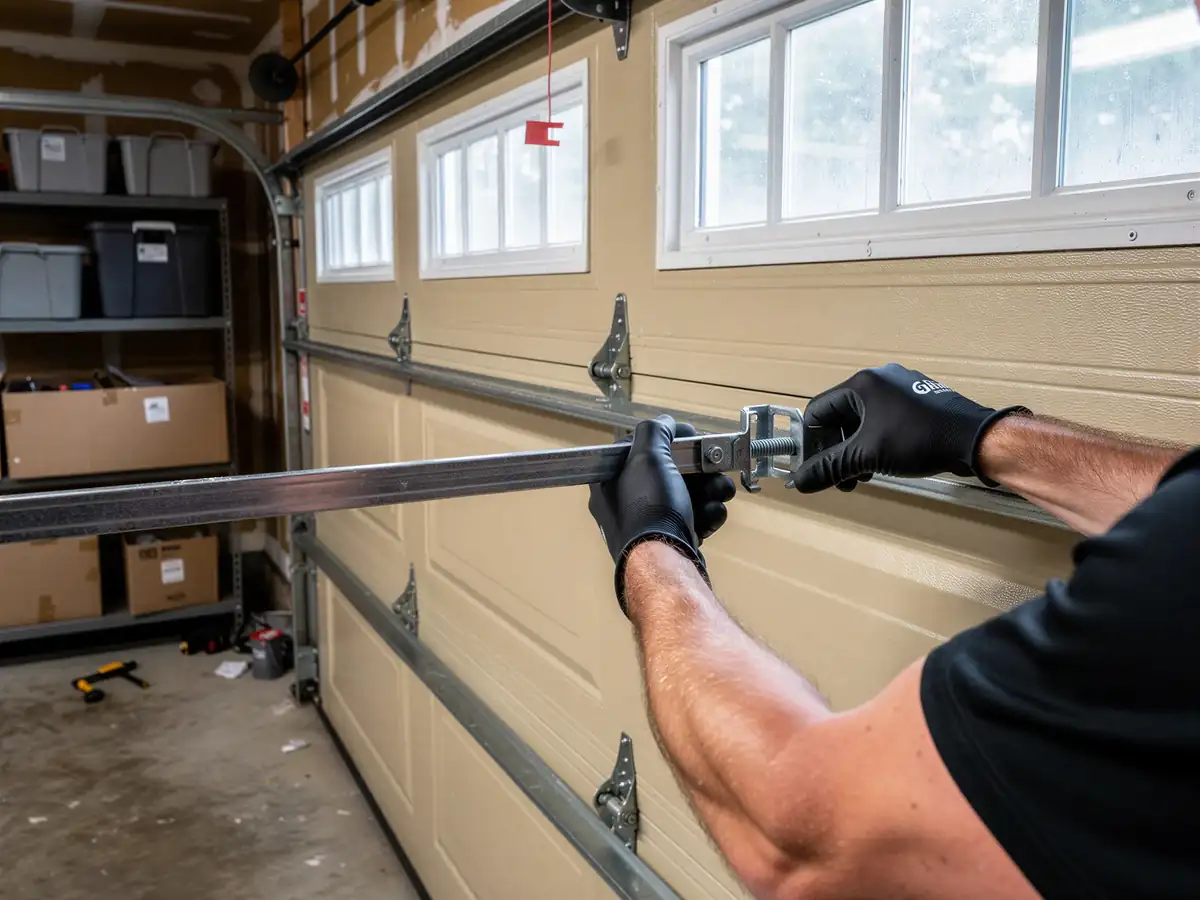
On a door that matches the area's 1966 median build year, the most common finding isn't a broken part - it's drift. Decades of settling, repainting, and weatherstripping replacements shift the track alignment by fractions of an inch that add up to a door that binds or slams. We check plumb on both tracks, re-torque the lag bolts holding the hardware to framing that's had fifty-plus years to move, and test the spring's lift balance against the door's actual weight rather than its factory spec, since panels get heavier after repaint after repaint.
The honest limit here: if the track itself is bent or the jamb has rotted at the hinge points, that's past a maintenance visit. We'll tell you straight if what you've got needs a repair quote instead of a tune-up, rather than patching something that's going to fail again in a season. With a median household income in the area at $58,972, we know a repair quote matters, and we'd rather give you an accurate one up front than a maintenance bill that didn't fix the real problem.
Parts We Carry
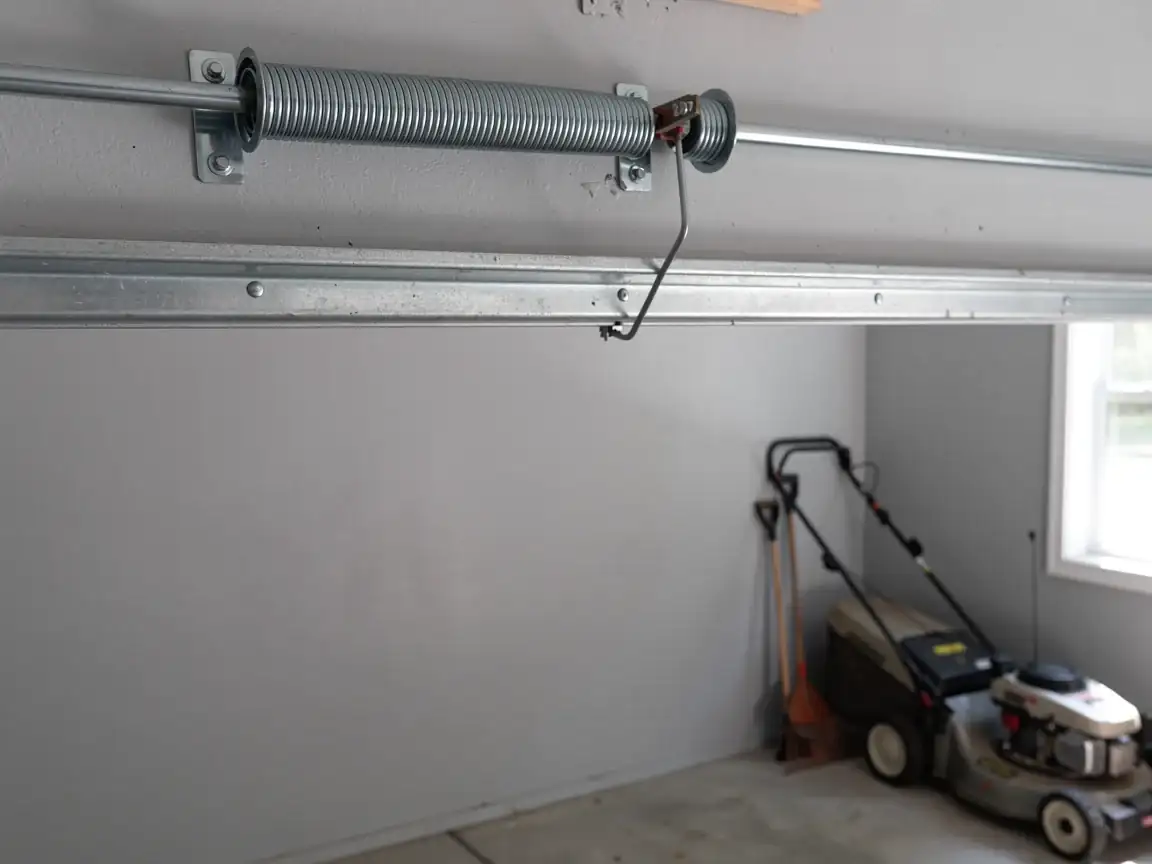
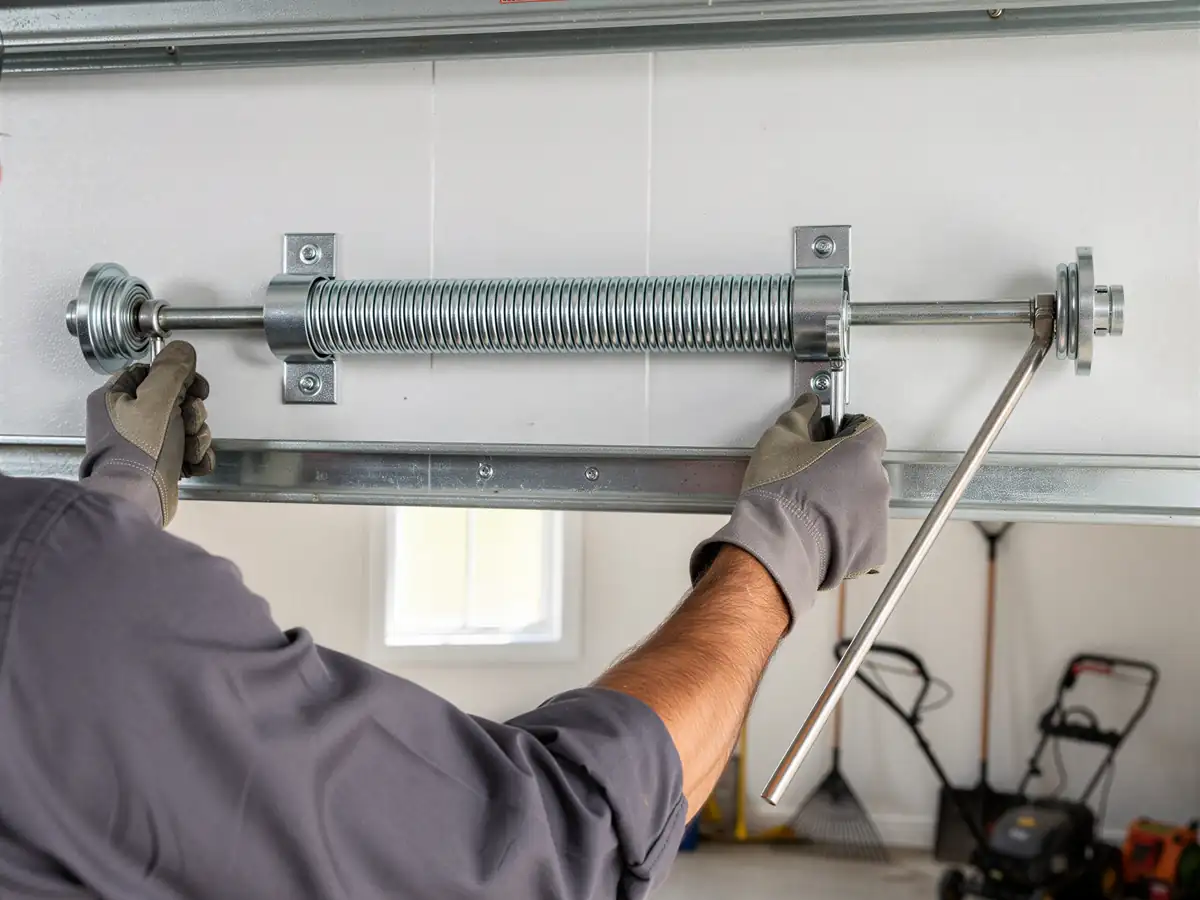
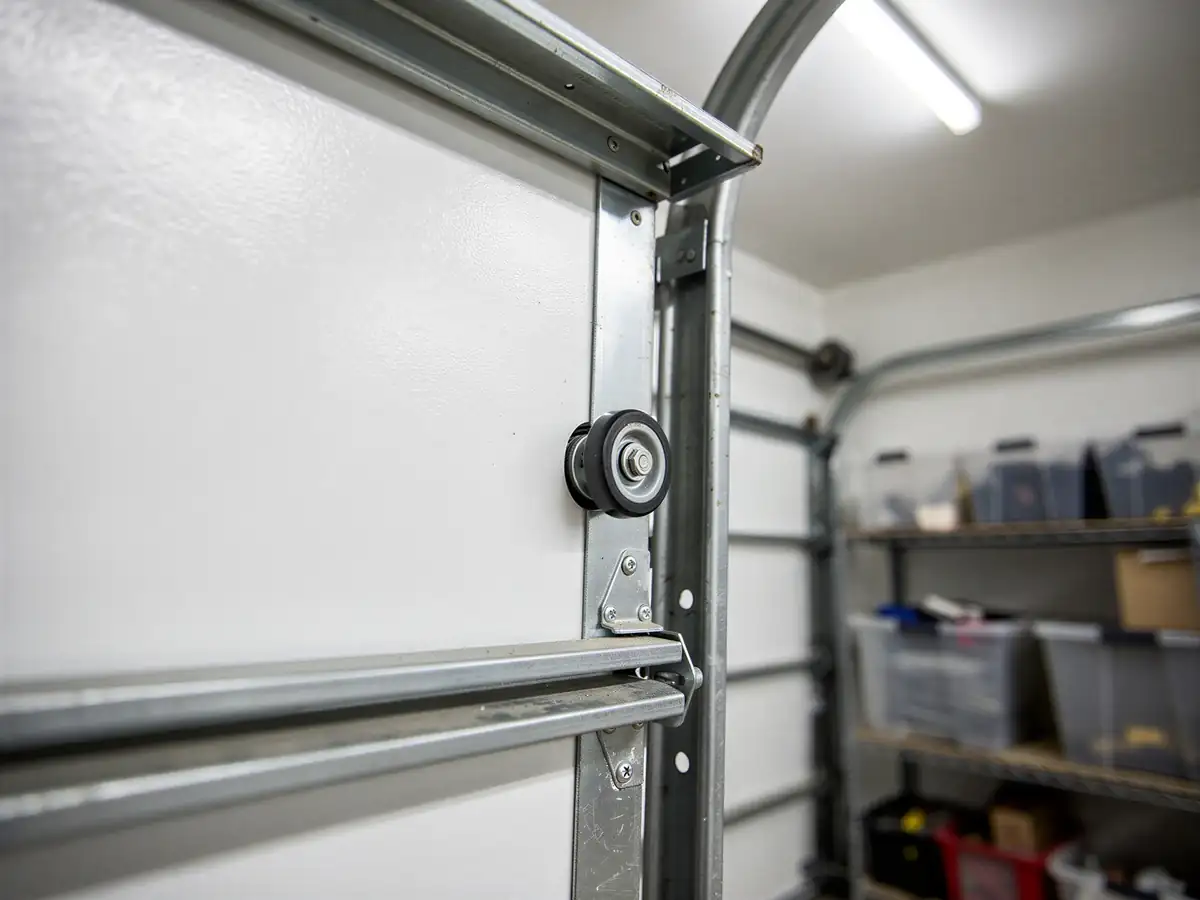
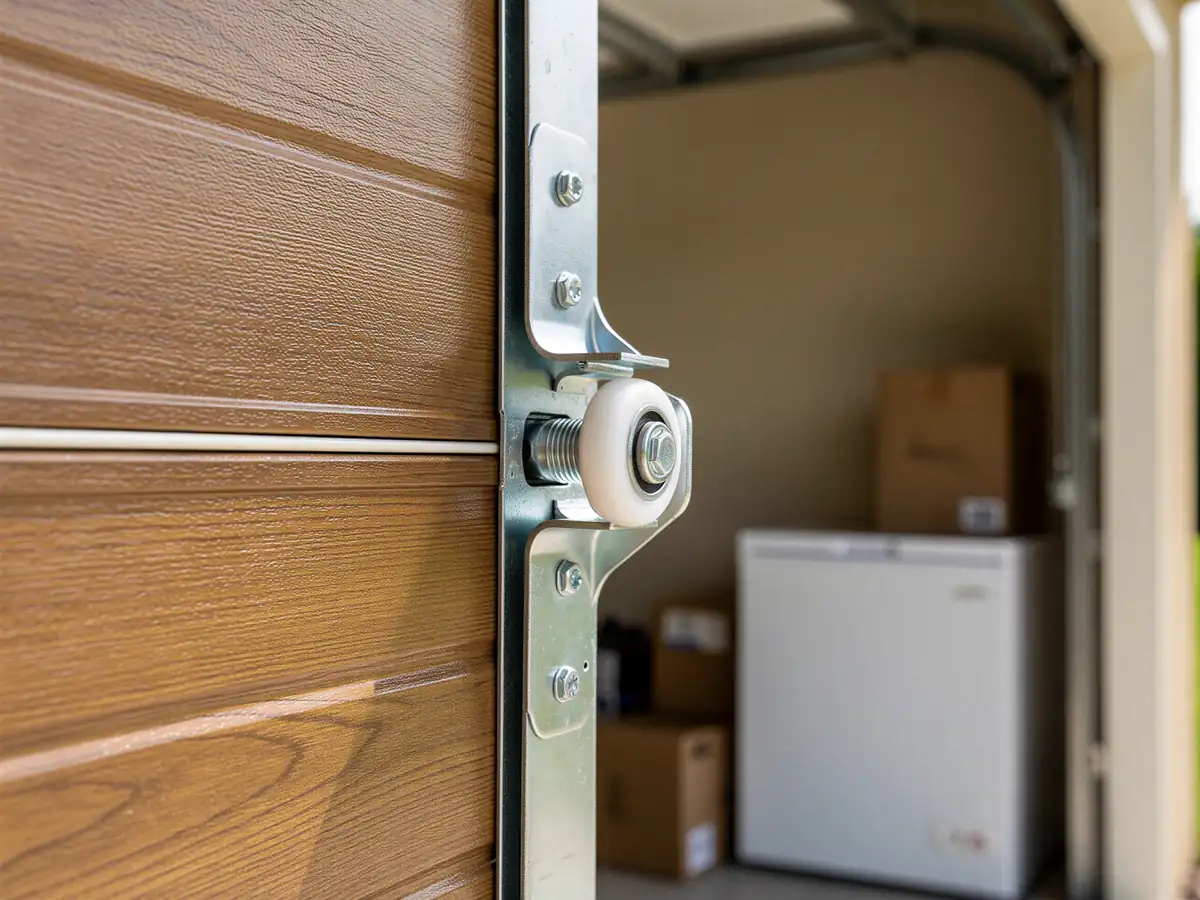
For a 1966-era door, the parts that wear out aren't always the parts a newer house needs. Rollers on original tracks are often a narrower gauge than today's standard, and older torsion springs sometimes sit on a shaft diameter that current off-the-shelf springs don't match. We carry a working range of roller and cable stock on the truck, but a non-standard spring for an older Portsmouth door occasionally means a short order delay rather than a same-visit swap - that's the one limitation worth saying plainly.
Winters here fall in a cold-moderate climate band, which means hardware doesn't fight the kind of extreme freeze-thaw cycling you'd get further north, but humidity swings still dry out old weatherstrip and gum up unlubricated hinges faster than owners expect. We stock general-purpose lubricant and weatherstrip rated for that swing as standard kit, not an upsell.